
If you need a virtual card for online subscriptions, cross-border payments, or digital services, Supay is a name you may have already seen. It promotes itself as a virtual credit card and cross-border payment solution, with support for services such as ChatGPT renewal, Steam payments, and API access for broader payment use cases.
In this Supay virtual card review, I’ll walk through what Supay is, what it is best used for, its biggest strengths and weaknesses, and whether it is a practical option for online users who need flexible payment tools.
This guide is written for freelancers, affiliate marketers, digital entrepreneurs, remote workers, and anyone looking for a simpler way to pay for international digital products and services.
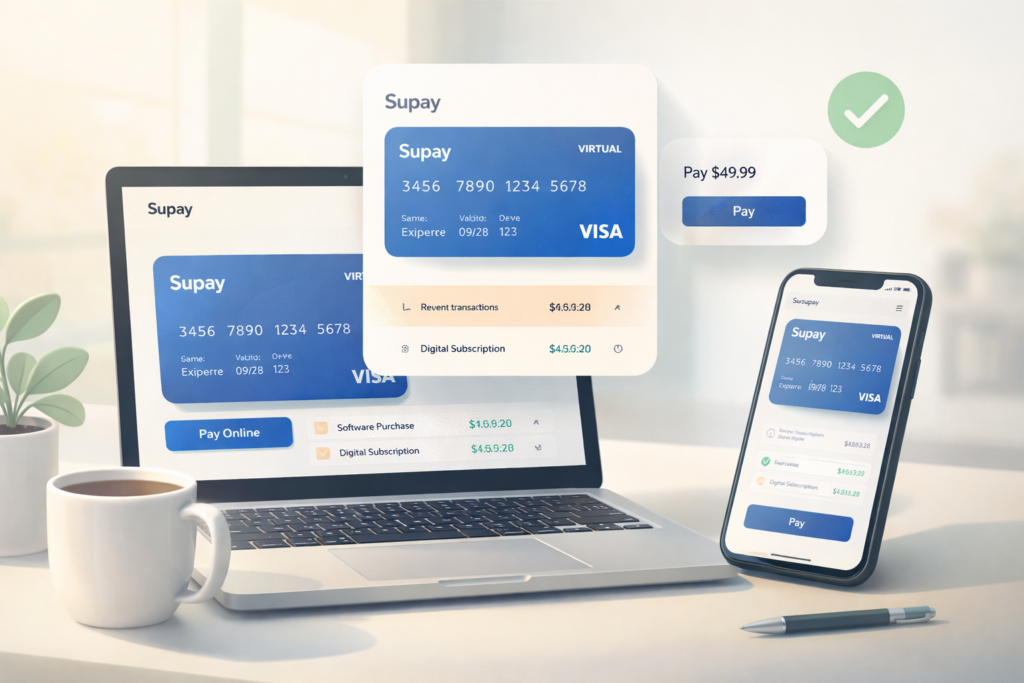
Looking for a simple way to pay for online subscriptions or AI tools? Supay provides a virtual credit card that can be used for digital services, SaaS platforms, and cross-border payments.
👉 Create your Supay virtual card here
What Is Supay?
Supay is a digital payment platform positioned around virtual credit cards and cross-border payment scenarios. Based on its public-facing website, the platform highlights use cases such as virtual card payments, overseas shopping, ChatGPT renewals, Steam payments, and API-based payment access. That positioning suggests Supay is built mainly for online spending rather than traditional banking.
That makes it especially relevant for people who often pay for:
- AI tools and subscriptions
- digital software and SaaS products
- international online services
- gaming and entertainment platforms
- cross-border business expenses
Instead of relying on a traditional local bank card, users can use a virtual card solution that is more focused on digital payment flexibility.
Quick Verdict
| Category | My Take |
|---|---|
| Best for | Online subscriptions, AI tools, cross-border digital payments |
| Not ideal for | People who want a full traditional bank account |
| Main strength | Focused on virtual card and online payment scenarios |
| Main weakness | Public information is less detailed than larger fintech brands |
| Overall | A practical option for digital payment use cases if your main goal is flexible online spending |
Key Features of Supay
| Feature | What It Means | Why It Matters |
|---|---|---|
| Virtual credit card | A digital card for online payments | Useful for subscriptions, software, and international websites |
| Cross-border payments | Designed for overseas payment scenarios | Helpful if your local card often fails on foreign platforms |
| ChatGPT renewal support | Marketed for AI subscription payments | Relevant for users paying for AI tools |
| Steam payment support | Can be used for gaming-related digital purchases | Shows broader online payment compatibility |
| API access | Supports more advanced payment integration use cases | Potentially useful for businesses and developers |
For most readers, the most important feature is still the virtual card itself. If your main need is paying for online products that do not work smoothly with your local card, this is the feature that matters most.
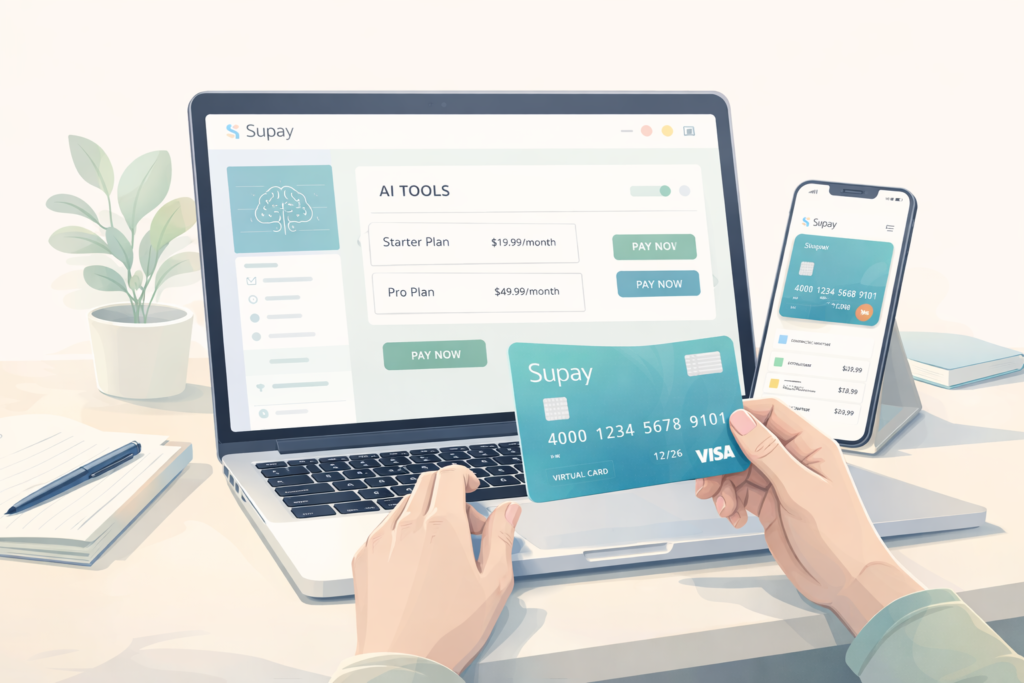
How Supay Works
The basic idea is simple. Instead of using a physical bank card, you use a virtual card inside a digital payment platform. That card can then be used for supported online payment scenarios.
| Step | What You Do |
|---|---|
| Step 1 | Create a Supay account |
| Step 2 | Set up or obtain a virtual card |
| Step 3 | Add funds according to the platform’s supported methods |
| Step 4 | Use the card for online payments and digital subscriptions |
For users who regularly pay for overseas software, cloud services, AI tools, or digital entertainment, this kind of workflow is often more convenient than depending on a single domestic card.
Who Should Use Supay?
Supay is not for everyone. It is best suited to people with specific online payment needs.
| User Type | Why Supay May Be Useful |
|---|---|
| Affiliate marketers | Need to pay for tools, domains, hosting, AI software, and marketing services |
| Freelancers | Often buy overseas SaaS subscriptions and remote work tools |
| Digital entrepreneurs | Need flexible payment methods for international online services |
| Developers or teams | May benefit from API-related payment scenarios |
| Gamers or digital buyers | May use it for platforms such as Steam and similar online purchases |
On the other hand, if you are looking for a full-featured digital bank with broad savings, local transfers, and long-established brand trust, larger fintech services may still feel more complete.
Supay for ChatGPT, SaaS, and Other Online Payments
One reason people search for a Supay card review is that many users specifically want a card for subscriptions that their existing bank card cannot handle smoothly. Supay explicitly mentions use cases like ChatGPT renewal on its public site, which makes it relevant for people paying for AI tools and online services.
In practical terms, this kind of card can be useful for:
- AI subscriptions
- software tools
- hosting and domain purchases
- gaming platforms
- cross-border digital services
If your goal is simply to get a working payment method for online digital products, Supay is easier to understand as a utility product than as a full financial account.
If you frequently pay for online services such as SaaS tools, AI subscriptions, or international digital platforms, a virtual card can make the process much easier.
👉 Start using Supay to manage your online payments →
Supay Pros and Cons
Pros
| Advantage | Why It Matters |
|---|---|
| Focused positioning | Built around virtual card and online payment use cases |
| Relevant for AI and subscription users | Useful if you often pay for ChatGPT or similar services |
| Cross-border payment angle | Helpful for users dealing with overseas websites and services |
| API mention on official site | Suggests broader business or advanced usage potential |
Cons
| Disadvantage | Why It Matters |
|---|---|
| Less public detail than major fintech brands | Users may need to verify terms inside the dashboard before committing |
| Not as universally known as major payment platforms | Brand trust may feel lower for cautious users |
| Feature depth may vary by account or region | You should always confirm current rules, supported services, and charges before using it heavily |
Supay vs Traditional Bank Cards
| Factor | Supay Virtual Card | Traditional Bank Card |
|---|---|---|
| Main purpose | Online and cross-border digital payments | General everyday banking and payments |
| Convenience for digital subscriptions | Usually stronger for this use case | Can vary depending on issuer and region |
| Physical card usage | Not the main focus | Usually standard |
| Best suited for | Online users, freelancers, digital businesses | Broad general-purpose personal finance |
Is Supay Safe?
When people search for a Supay virtual card review, safety is always one of the biggest concerns. As with any digital payment platform, the smart approach is to judge both the product’s positioning and your own payment habits.
Supay presents itself as a digital payment tool for online use cases rather than a traditional full-service bank. That means users should treat it like a payment utility: practical for spending scenarios, but still something to use carefully and monitor regularly.
Good safety habits include:
- using strong passwords
- enabling any available account security features
- checking transactions regularly
- not keeping more balance than needed for near-term spending
- reviewing current platform rules before large payments
Pricing and Fees: What You Should Know
Fee sensitivity matters a lot with virtual card products. However, one mistake many review articles make is publishing fixed fee numbers that later become outdated. Since visible public information can change and not every pricing detail is clearly exposed on the public homepage, it is smarter to verify the latest charges inside the platform before making fee-based comparisons.
Here are the fee categories you should personally confirm before using Supay:
| Fee Item | What to Check |
|---|---|
| Card opening fee | Is there a one-time activation or issuance cost? |
| Top-up fee | What does it cost to add funds? |
| Transaction fee | Are there charges for purchases? |
| Refund handling | How are refunds processed, and are fees involved? |
| Withdrawal or balance handling | Are there limits or deductions? |
This approach is safer for SEO too, because it reduces the chance of publishing pricing claims that go stale and hurt trust.
My Final Verdict on Supay
Overall, Supay looks most useful as a special-purpose virtual card solution for online subscriptions and cross-border digital payments. Its public positioning around virtual credit cards, overseas payments, ChatGPT renewal, Steam payments, and API access makes it relevant for modern internet users rather than
If your main problem is simple — “I need a flexible card for online international payments” — then Supay is worth considering. If your goal is a large all-in-one fintech account with deeper public documentation and stronger mainstream recognition, you may still want to compare it with larger alternatives.
For the right user, though, Supay can be a practical tool rather than just another fintech brand name.
Want to try Supay for yourself? You can create an account and start using a virtual card for online payments in just a few minutes.
👉 Get your Supay virtual card here
Frequently Asked Questions
What is Supay used for?
Supay is mainly positioned for virtual card payments and cross-border online spending. Public-facing materials mention scenarios such as ChatGPT renewal, Steam payments, overseas shopping, and API-
Is Supay a virtual card platform?
Yes. Supay publicly presents itself as a virtual credit card product and digital payment solution.
Can I use Supay for ChatGPT?
Supay’s public website explicitly mentions ChatGPT renewal as one of its use cases.
Is Supay good for cross-border payments?
That appears to be one of its main product angles, since the platform markets itself around cross-border
Is Supay worth it?
It can be worth it if you specifically need a virtual card for digital subscriptions or overseas online services. The value is strongest when judged as a utility tool for online payments, not as a full traditional banking replacement.
Conclusion
If you are comparing virtual card options and want something focused on online spending, Supay is a name worth looking at. Its biggest appeal is not complexity. It is convenience: a virtual card, cross-border payment use cases, and support for modern online services that many people struggle to pay for with ordinary local cards.
If that sounds like exactly what you need, Supay may be a practical option to test.
If you need a flexible payment solution for online subscriptions, digital tools, or cross-border services, Supay is worth considering.
👉 Get $1 Off Your First Supay Virtual Card
About the Author
Xu Xun
Contact: xuxun1208@gmail.com
Last Updated: June 2026