
ElevenLabs is one of the most recognized names in AI voice software, but this ElevenLabs review is not just about hype. If you are comparing voice generation tools for content creation, localization, transcription, voice cloning, or product integration, the real question is whether ElevenLabs gives you enough quality and workflow value to justify the price.
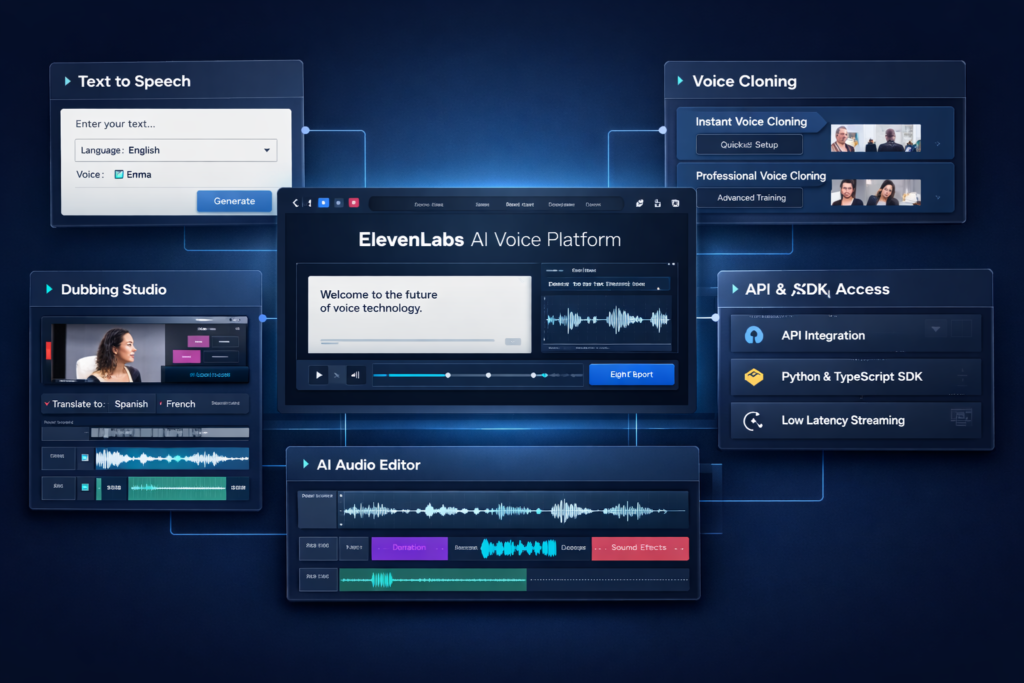
That is why this article looks at ElevenLabs from multiple angles. Instead of treating it like a simple text-to-speech app, this review breaks down how the platform performs across voice generation, dubbing, Studio editing, speech to text, API access, commercial use, and team scalability.
If you want a ranking-focused answer to whether ElevenLabs is worth it in 2026, this guide is built for exactly that. You will see what the platform does well, where it gets expensive, which plan makes the most sense, and who should seriously consider using it.
Quick Verdict
ElevenLabs is not the cheapest AI voice tool on the market, but it is one of the most complete. It works best for creators, businesses, and developers who need realistic voice output plus a broader workflow that includes cloning, localization, editing, transcription, and product integration.
If you only need occasional low-cost voice generation, ElevenLabs may feel like more platform than you need. But if you care about production quality, multilingual expansion, and building repeatable audio workflows, it is one of the strongest options available right now.
| Category | Verdict |
|---|---|
| Best for | Creators, publishers, educators, marketers, app builders, and teams that need realistic AI audio |
| Not ideal for | Users who only need a few cheap voice clips every now and then |
| Biggest strength | Strong voice quality plus a wide product ecosystem |
| Biggest weakness | Costs can rise quickly when usage scales |
| Most valuable features | Text to speech, voice cloning, dubbing, Studio, speech to text, API access |
| Overall rating | A strong buy for serious AI audio workflows |
What Is ElevenLabs?
ElevenLabs is an AI audio platform rather than a single-feature voice generator. On its official site, the company positions the platform around creative audio production, conversational agents, and production-ready APIs, which tells you immediately that it is targeting a much wider market than casual text-to-speech users.
For creators, that means voice generation, voice cloning, dubbing, Studio editing, sound effects, and related tools can live under one roof. For developers and businesses, it means there is also a pathway into APIs, real-time voice experiences, and enterprise controls instead of needing to switch vendors as the use case gets more serious.
| Platform Area | What It Covers |
|---|---|
| ElevenCreative | Speech generation, Studio editing, dubbing, voices, music, sound effects, and creative production workflows |
| ElevenAgents | Voice and chat agents, analytics, testing, workflows, and guardrails for conversational use cases |
| ElevenAPI | APIs and SDKs for text to speech, speech to text, dubbing, and related AI audio functions |
This wider positioning is a major reason ElevenLabs keeps showing up in AI voice conversations. It is not just trying to help you make a voice clip. It is trying to become the infrastructure layer for AI audio creation, localization, and deployment.
Why ElevenLabs Stands Out in a Crowded AI Voice Market
The first reason is voice quality. ElevenLabs has spent years building its brand around lifelike, expressive, emotionally aware speech, and that positioning still matters because many cheaper tools can produce audio, but far fewer can produce audio that sounds polished enough for videos, narration, training material, podcasts, or customer-facing experiences.
The second reason is workflow depth. A lot of AI voice tools feel good in demos but fall apart when you need editing, multilingual support, voice consistency, team review, or publishing workflows. ElevenLabs moves beyond generation into production, which makes the platform more appealing to people who need output at scale rather than one-off experiments.
The third reason is breadth. The platform combines text to speech, voice cloning, speech to text, dubbing, Studio, and APIs in a way that can support creators, agencies, product teams, and enterprises. That does not automatically make it the best choice for every buyer, but it does explain why ElevenLabs often feels more future-proof than narrower competitors.
Core Features in This ElevenLabs Review
1. Text to Speech
Text to speech is still the core of the ElevenLabs experience. This is the feature most buyers will notice first, and it remains one of the platform’s strongest selling points because the voices sound more expressive and natural than the flat, robotic output that still hurts many competing tools.
What makes ElevenLabs text to speech more useful in practice is that it is not only about raw generation quality. It is also about control, multilingual support, and the ability to use those voices across real workflows like YouTube narration, product explainers, educational content, long-form reading, accessibility audio, and customer interactions.
If your goal is to turn written content into high-quality spoken content at scale, this feature alone can justify serious interest in the platform. It is especially useful for publishers and marketers who want to repurpose the same content into article audio, video scripts, landing page narration, and multilingual versions without rebuilding the process every time.
2. Voice Cloning
Voice cloning is one of the clearest reasons people move from casual TTS tools to ElevenLabs. Instead of choosing from a library alone, you can create a voice that matches a creator, narrator, presenter, or brand identity more closely, which is far more valuable for repeat content production.
ElevenLabs separates voice cloning into faster instant cloning and higher-quality professional cloning. That matters because different users need different tradeoffs. Some want quick testing with limited audio. Others want much better realism and consistency for audiobooks, premium narration, training content, or client work.
For creators and businesses, the real value of voice cloning is not novelty. It is operational efficiency. When revisions happen, you do not need to re-record an entire script manually. You can update lines, keep voice consistency, and move much faster across long-form projects.
3. Speech to Text
Speech to text makes ElevenLabs more useful than a pure voice generation tool. Instead of only creating audio, the platform can also turn spoken content back into text, which is valuable for captions, transcripts, searchable archives, content repurposing, meeting notes, training content, and media workflows.
This feature becomes especially powerful when combined with the rest of the platform. A team can transcribe interviews, edit the transcript into a script, turn the new script into narration, and then localize or publish it in different formats. That type of connected workflow is where ElevenLabs starts to outperform single-purpose tools.
For SEO and content teams, speech to text also helps unlock more value from recorded content. A webinar, product demo, founder interview, or podcast episode can become a transcript, summary, quote bank, blog post seed, social snippets, subtitles, and voice-driven content updates.
4. Dubbing and Localization
Dubbing is one of the strongest expansion features inside ElevenLabs. If you already have successful content in one language, AI dubbing can help you extend its reach without rebuilding every asset from scratch. That makes the platform attractive not just to creators, but also to educators, brands, course publishers, agencies, and media teams.
The value here is not only translation. It is the attempt to preserve timing, speaker feel, and viewing experience so the localized version still feels natural. That difference matters because viewers notice when dubbed content feels stiff, badly timed, or emotionally disconnected from the original.
If international growth matters to your content strategy, dubbing alone can shift ElevenLabs from a nice tool to a strategically important one. Many businesses do not need more content ideas. They need better ways to reuse the content they already know performs.
5. Studio
Studio is where ElevenLabs becomes much more than a voice generator. Instead of forcing you to move between separate tools for scripting, narration, captions, timeline editing, review, and export, Studio creates a more unified production workflow for longer projects.
This matters most for users producing audiobooks, narrated videos, podcasts, explainers, and educational material. Long-form production often breaks down not because the voice model is bad, but because the editing, review, and publishing process gets messy. Studio is designed to reduce that friction.
For teams and agencies, collaboration features also increase the platform’s value. Review workflows, captions, multilingual support, speaker assignment, and project sharing are the types of details that make a tool more practical in real publishing environments.
6. API Access and Voice Agents
If you are a developer or product team, ElevenLabs becomes more interesting because it is not limited to creator-side workflows. The platform also supports APIs, SDKs, and conversational agent use cases, which means voice can become part of your product, service flow, or support system rather than just part of your content stack.
This opens up a very different buying case. Instead of asking whether ElevenLabs can narrate a video, you start asking whether it can power onboarding, voice assistants, customer service experiences, accessibility features, in-app narration, or multilingual user interactions.
That broader potential is one reason the platform appeals to startups and larger companies. A tool that starts with creator use cases but grows into product infrastructure usually has a longer useful life inside a business.
ElevenLabs Pricing: Plans, Value, and What You Actually Get
Pricing is one of the biggest decision points in any ElevenLabs review because the platform can feel inexpensive at the entry level and much more serious once usage grows. The good news is that the plan ladder is broad enough to support beginners, solo creators, teams, and large businesses.
The more important point is that ElevenLabs pricing is not only about monthly cost. It is also about what level of voice quality, cloning, collaboration, Studio usage, and production flexibility you unlock at each stage. That is why cheaper plans may look attractive at first but not always fit long-term production needs.
| Plan | Monthly Price | Best For | Highlights |
|---|---|---|---|
| Free | $0 | Testing and light experimentation | 10k credits, core creative tools, 3 Studio projects |
| Starter | $5 | Beginners and side creators | Commercial license, instant voice cloning, 20 Studio projects, dubbing access |
| Creator | $22 standard price, with first month at $11 | Serious solo creators | Professional voice cloning, higher-quality audio, 100k credits |
| Pro | $99 | Power users and growing businesses | 500k credits, stronger output options, API-focused upgrades |
| Scale | $330 | Teams | Team collaboration, 3 workspace seats, 2M credits |
| Business | $1,320 | High-volume companies | 5 seats, 11M credits, lower-latency options, more cloning capacity |
| Enterprise | Custom | Large organizations with compliance and custom deployment needs | Custom credits, custom seats, stronger support, enterprise terms, custom controls |
Which ElevenLabs Plan Makes the Most Sense?
The free plan is useful for testing voice quality and getting a feel for the platform, but it is not where most serious users will stay. It is best treated as a proof-of-concept plan rather than a full production solution.
The Starter plan makes sense for beginners who want commercial use and instant voice cloning without spending much. It is a good first paid step, but many creators will eventually outgrow it if they produce content regularly.
The Creator plan is where ElevenLabs starts to feel more complete for serious solo users. Professional voice cloning and higher-quality audio make it the most interesting plan for YouTubers, narrators, educators, affiliate publishers, and small agencies that care about better output.
The Pro, Scale, and Business plans are aimed more at users with either high output volume or operational needs like team workflows, product integration, or significant monthly demand. These plans are easier to justify when AI audio directly supports revenue, efficiency, customer experience, or large-scale content production.
| User Type | Best Starting Plan | Why |
|---|---|---|
| Casual tester | Free | Enough to evaluate voice quality and basic workflow |
| New creator | Starter | Low-cost commercial use and instant cloning |
| Serious solo creator | Creator | Better quality and professional cloning |
| Agency or team | Scale | Team collaboration and higher monthly volume |
| Large business | Business or Enterprise | Scale, support, and stronger operational controls |
What ElevenLabs Does Better Than Many Competitors
The biggest advantage ElevenLabs has over many AI voice competitors is that it combines quality with expansion paths. A lot of tools look fine until your needs grow. Then you discover they do not handle cloning well, they do not support real editing workflows, they lack serious API access, or they do not help with localization.
ElevenLabs gives users a clearer path from first project to larger workflow. You can start by generating a voiceover, then move into cloning, then use Studio, then add captions, then localize with dubbing, then integrate APIs, and eventually explore agents or enterprise controls if your use case keeps growing.
That does not mean every buyer needs all of those layers. It means the platform does not trap you in a tiny feature box. For many serious users, that flexibility is worth paying for because switching platforms later often costs more than starting with a stronger system now.
Real Pros and Cons of ElevenLabs
| Pros | Cons |
|---|---|
| Very natural and expressive voice output | Can become expensive as usage grows |
| Strong ecosystem across TTS, cloning, STT, dubbing, Studio, and APIs | Broader platform means a steeper learning curve for some users |
| Useful for creators, teams, developers, and businesses | Not the best value for ultra-light or hobby-only usage |
| Good scaling path from solo work to business use | Feature breadth can feel overwhelming at first |
| Helpful for multilingual content strategies | You still need quality control for polished final output |
| Strong business and enterprise story | Different product pages emphasize different language counts, which can confuse buyers |
No serious review should pretend the platform is perfect. ElevenLabs is strong, but it is strongest when you actually use its broader ecosystem. If you only use a small slice of what it offers, the pricing can feel less impressive than it does for users building full workflows around it.
Best ElevenLabs Use Cases
| Use Case | Why ElevenLabs Fits |
|---|---|
| YouTube voiceovers | Natural narration, voice options, and a scalable workflow for regular publishing |
| Audiobooks | Long-form production, better cloning, and stronger editing workflow through Studio |
| Course creation | Voice consistency, multilingual support, and repurposing across lessons and regions |
| Podcast narration and fixes | Useful for revisions, scripted inserts, and faster post-production |
| Localization | Dubbing and multilingual workflows help expand content into new markets |
| Accessibility audio | Turns written content into more natural listening experiences |
| Apps and SaaS products | APIs and SDKs make voice features easier to build into a product |
| Customer experience workflows | Agents and voice infrastructure support broader business use cases |
The strongest fit is usually for users who care about either content scale or workflow leverage. When voice helps you produce more content, improve product experience, expand into more languages, or reduce recording friction, ElevenLabs becomes easier to justify.
Is ElevenLabs Good for Content Creators, Marketers, and SEO Teams?
Yes, and this is one of the most practical parts of the platform. Content teams are under pressure to do more than write blog posts. They need audio, video, localization, accessibility, captions, shorts, summaries, and stronger repurposing systems. ElevenLabs fits well into that reality.
For publishers and affiliate marketers, ElevenLabs can help turn written articles into spoken versions, product walkthroughs, narrated comparisons, or video voiceovers. For brands and educators, it can help convert long-form written assets into training material, international versions, and more accessible experiences.
It is important to be realistic, though. ElevenLabs does not magically make content rank. What it does is help teams build richer content ecosystems and extract more value from the same research, scripts, demos, and articles. In competitive markets, that kind of workflow advantage matters.
Is ElevenLabs Good for Developers and Businesses?
For developers, ElevenLabs is much more than a creative tool. The platform’s API direction makes it relevant for products that need text to speech, transcription, low-latency voice, multilingual delivery, and other audio functions as part of the user experience.
For businesses, the value comes from both functionality and maturity. A tool may generate nice voices, but that is not enough for a company making long-term buying decisions. Teams also care about security, permissions, collaboration, reliability, and the ability to deploy voice capabilities in customer-facing systems without rebuilding everything later.
This is where ElevenLabs becomes more compelling than smaller AI voice apps. It is not just trying to impress on output quality. It is also trying to become operationally usable.
Where ElevenLabs Falls Short
The biggest downside is cost at scale. A casual buyer may see the low entry price and assume ElevenLabs is a cheap tool overall, but that is not always how the platform feels once you move into heavier production, more credits, better plans, team seats, or higher operational demands.
The second downside is complexity. This is the natural tradeoff of a broad ecosystem. If you only want one quick job done, the larger platform can feel heavier than a narrow specialist tool. Some users would rather trade depth for simplicity, especially in the beginning.
The third issue is that the platform still benefits from human review. Even strong AI voices and localization tools need script cleanup, pronunciation checks, timing adjustments, and audience-aware editing. Serious users should treat ElevenLabs as an acceleration layer, not a replacement for judgment.
There is also a detail buyers should pay attention to when researching the platform: not every product page uses the same language-support number. That does not mean the company is misleading users, but it does mean you should match the feature to the exact use case instead of assuming one headline number applies everywhere.
ElevenLabs Review: Is It Worth It in 2026?
For the right user, yes, ElevenLabs is worth it. It is one of the best AI voice platforms for people who care about more than basic speech generation. The platform becomes especially attractive when you value natural voice quality, cloning, localization, editing workflows, and long-term flexibility in one ecosystem.
If your only goal is to generate a few low-cost clips each month, you may not need this much platform. But if you are publishing regularly, building products, running multilingual campaigns, or trying to turn AI audio into part of your operating system, ElevenLabs is one of the strongest options you can choose.
My overall verdict is simple: ElevenLabs is not the most minimal choice, but it is one of the most scalable and strategically useful choices. For serious creators, businesses, and developers, that matters far more than chasing the absolute cheapest plan.
Frequently Asked Questions
Is ElevenLabs free to use?
Yes. ElevenLabs has a free plan, which is useful for testing the platform, sampling voice quality, and exploring the workflow before paying for a higher tier.
Is ElevenLabs good for YouTube voiceovers?
Yes. ElevenLabs is a strong fit for YouTube voiceovers because the voices sound natural, the platform supports scalable production, and you can expand into captions, editing, cloning, and localization as your channel grows.
Is ElevenLabs worth paying for?
For light hobby use, maybe not. For creators, teams, and businesses that use AI audio seriously, the paid plans are much easier to justify because the value comes from workflow efficiency as much as from voice quality.
What is the best ElevenLabs plan for most creators?
For many serious solo creators, the Creator plan is the most appealing balance because it unlocks stronger audio quality and professional voice cloning without pushing into team pricing too early.
Can ElevenLabs help with multilingual content?
Yes. Multilingual speech generation, dubbing, captions, and localization-oriented workflows make ElevenLabs especially valuable for users who want to reach audiences in more than one language.
Is ElevenLabs only for creators?
No. ElevenLabs also targets developers, startups, teams, and enterprises through APIs, voice agents, business features, and stronger deployment options.
Does ElevenLabs replace human voice talent completely?
Not in every case. ElevenLabs can dramatically speed up production and reduce recording work, but human review, editing, brand judgment, and audience sensitivity still matter for polished final content.
About the Author
Xu Xun
Contact: xuxun1208@gmail.com
Last Updated: June 2026